




The Growing Democratic Deficit in Indian Journalism
As India marks Hindi Journalism Day on May 30, the occasion offers more than a moment of celebration. It presents an opportunity for serious introspection about the state of the country’s media landscape, the shrinking space for independent journalism, and the growing reluctance of those in power to face public scrutiny.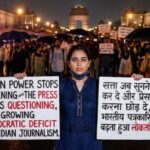
The history of Indian journalism is rooted in courage and public service. When Pandit Jugal Kishore Shukla launched Udant Martand in 1826, journalism was not a lucrative profession or a vehicle for fame. It was a mission. Newspapers became instruments of social reform, public awareness, and eventually the freedom movement. Journalists risked imprisonment, censorship, and financial ruin to ensure that truth reached the people.
Two centuries later, the profession stands at a crossroads.
The media is often described as the fourth pillar of democracy because it serves as a bridge between citizens and the state. A healthy democracy depends upon a free press capable of asking uncomfortable questions, exposing wrongdoing, and ensuring accountability. However, the reality of contemporary journalism increasingly suggests that this pillar is under strain.
Across television screens and digital platforms, public discourse is frequently dominated by political spectacle rather than public interest. Prime-time debates have become arenas of confrontation rather than forums for informed discussion. Complex issues such as unemployment, inflation, healthcare, education, environmental degradation, agrarian distress, and social inequality receive limited attention compared to controversies designed to generate outrage and attract viewership.
The commercialization of news has transformed journalism into a highly competitive industry where ratings often dictate editorial priorities. In this environment, sensationalism frequently triumphs over substance. The result is a media ecosystem where noise is mistaken for journalism and spectacle for accountability.
Even more concerning is the gradual erosion of the culture of questioning power.
In any democracy, elected leaders are expected to face scrutiny. Press conferences, interviews, and public interactions provide opportunities for citizens to understand government policies and hold decision-makers accountable. Yet there is a growing perception that difficult questions are increasingly unwelcome.
The incident involving Prime Minister Narendra Modi during a visit to Norway attracted global attention precisely because it touched upon this larger concern. When a journalist publicly questioned why independent media rarely receives opportunities to ask direct questions, the moment resonated far beyond the event itself. It symbolized a broader debate about transparency, accountability, and the relationship between political power and the press.
The issue extends beyond any single leader or political party. Governments everywhere naturally prefer favourable coverage. The responsibility of journalism is to resist becoming an extension of political communication. A media institution that merely echoes official narratives ceases to perform its democratic function.
India’s declining position in various international press freedom assessments has intensified these concerns. While such rankings are often debated, the underlying issues they highlight cannot be ignored. Journalists across the country continue to face legal challenges, economic pressure, online abuse, and in some cases threats to their safety. Independent media organizations struggle to survive in an environment where financial sustainability and editorial independence often collide.
At the same time, the digital revolution has fundamentally altered how information is produced and consumed.
Social media has democratized communication in unprecedented ways. Anyone with a smartphone can report events, share opinions, and challenge official narratives. This has weakened traditional gatekeepers and expanded public participation. Yet the same platforms have also accelerated the spread of misinformation, conspiracy theories, manipulated content, and hate-driven narratives.
The battle for public attention has created incentives for exaggeration, polarization, and emotional manipulation. Algorithms reward engagement rather than accuracy. In such an ecosystem, truth often becomes a casualty.
The consequences are profound. Citizens find it increasingly difficult to distinguish between verified facts and manufactured narratives. Public trust in institutions—including the media itself—continues to decline. Without trust, democratic discourse becomes fragmented and vulnerable to manipulation.
The solution does not lie solely with journalists or governments. It requires collective responsibility.
Media organizations must recommit themselves to ethical journalism, fact-checking, editorial independence, and public-interest reporting. Journalists must resist pressures that compromise professional integrity. Governments must recognize that criticism is not hostility and that accountability strengthens rather than weakens democratic legitimacy.
Equally important is the role of citizens. Audiences must support credible journalism, reject misinformation, and reward institutions that prioritize truth over sensationalism. Democracy cannot function if citizens consume only information that confirms their existing beliefs.
Hindi Journalism Day should therefore be viewed not merely as a celebration of the past but as a call to action for the future.
The pioneers of Indian journalism believed that the press existed to serve society, not power. They understood that journalism’s greatest strength was its independence and its willingness to ask difficult questions. Their legacy demands more than remembrance; it demands renewal.
A democracy flourishes when governments are willing to answer questions and when journalists are courageous enough to ask them. When power stops listening and the press stops questioning, democracy itself begins to weaken.
As India looks ahead, the challenge is clear: to restore public trust in journalism, protect the freedom of the press, and reaffirm the principle that no authority is above scrutiny.
The future of democratic accountability may well depend upon it.